

When buying or selling a business, it is common for part of the purchase price to be paid after closing. However, not all post-closing payment arrangements are the same.
Holdback
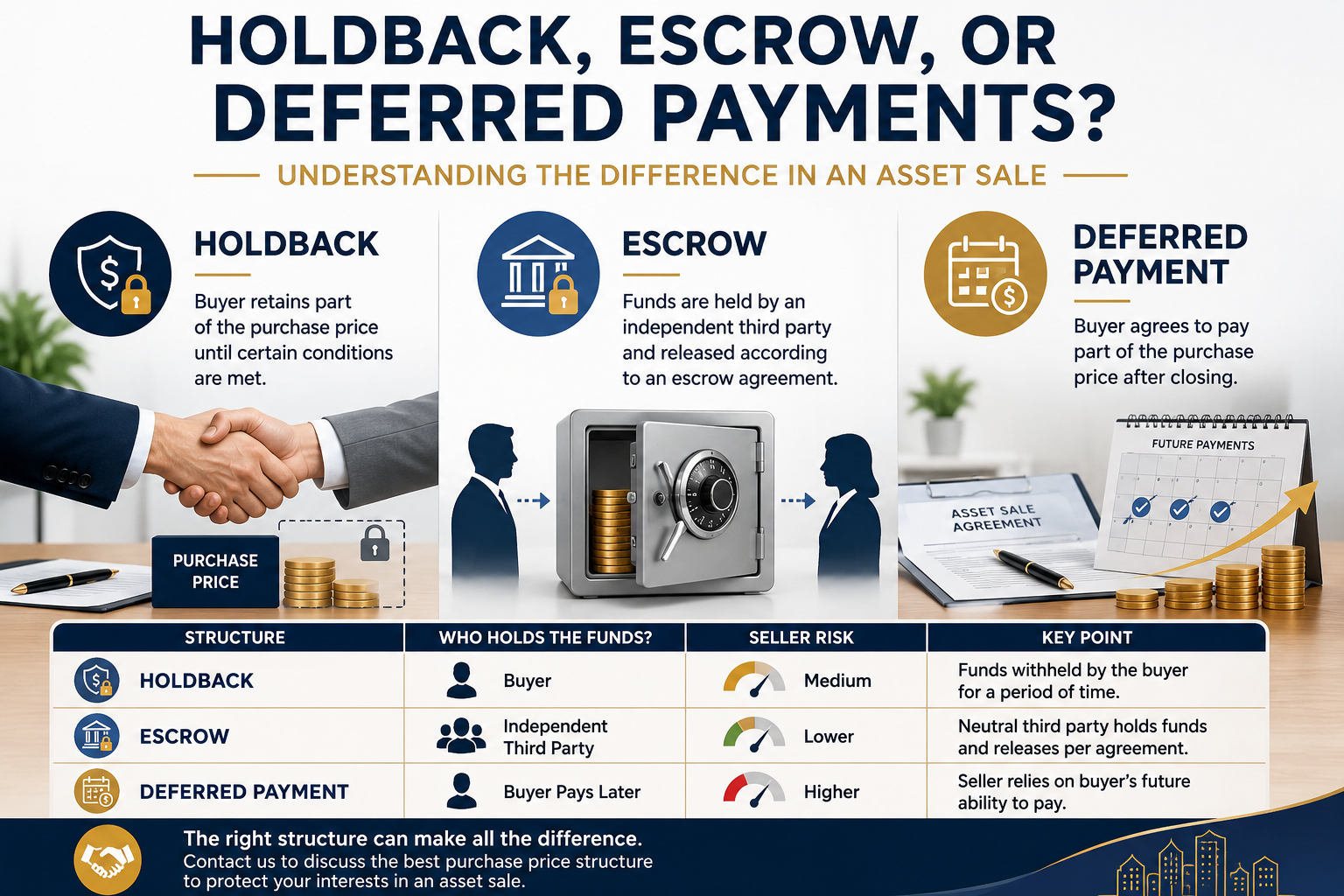
A holdback occurs when a portion of the purchase price is withheld by the buyer for a specified period after closing. The funds are intended to protect the buyer against issues such as breaches of representations and warranties, indemnity claims, or post-closing adjustments.
Escrow
An escrow is a specific type of holdback arrangement. Instead of the buyer retaining the funds, a neutral third party holds the money pursuant to an escrow agreement. The funds are released according to agreed conditions or timelines.
Escrows can provide additional protection to both parties because neither side has direct control over the funds.
Deferred Payments
A deferred payment is different. The purchase price is not withheld; rather, the buyer agrees to pay a portion of the purchase price at a future date or in installments.
Unlike an escrow or holdback, the seller is relying on the buyer’s future ability and willingness to make the payment. As a result, deferred payment arrangements often require additional protections such as security interests, guarantees, or acceleration rights.
Why the Distinction Matters
Although these terms are sometimes used interchangeably, they allocate risk very differently:
- Holdback: Buyer retains part of the purchase price.
- Escrow: A third party holds part of the purchase price.
- Deferred Payment: The buyer pays part of the purchase price later.
The structure chosen can have significant legal, financial, and tax implications for both buyers and sellers.
If you are buying or selling a business, contact us to discuss the most appropriate purchase price structure for your transaction and how to protect your interests before closing.